Non-Destructive Exterior
Underground Leak Detection Los Angeles
Lush soggy patches on your lawn, sinking paver driveways, or constant water meter movement? We locate buried underground pipe leaks accurately through dirt, asphalt, and concrete.
Request a Free Estimate
Get a fast response for your Underground Leak Detection
When You Need Underground Leak Detection: Symptoms & Technical Diagnosis
Identifying subtle indicators of plumbing breaches before catastrophic structural settling or high utility bills occur.
Perpetually Wet Lawn or Pavers
Spongy, saturated turf or damp paver joints in dry weather between the street meter and house.
Sudden Drop in Whole-House Pressure
Noticeable loss in dynamic water pressure when multiple faucets or showers run simultaneously.
Depressions or Sinking Pavers
Asphalt dipping or stone pavers settling unevenly along the path of the buried water line.
High Water Consumption Alerts
Automated high continuous usage letter or notification from LADWP or local water company.
Technical Procedure for Underground Leak Detection
Our systematic protocol ensures non-destructive accuracy, strict safety compliance, and certified pressure retention.
Meter & Shut-Off Pressure Isolation
We isolate the house shut-off valve and test meter flow to quantify subterranean loss volume in gallons per hour.
Electromagnetic Pipe Tracing
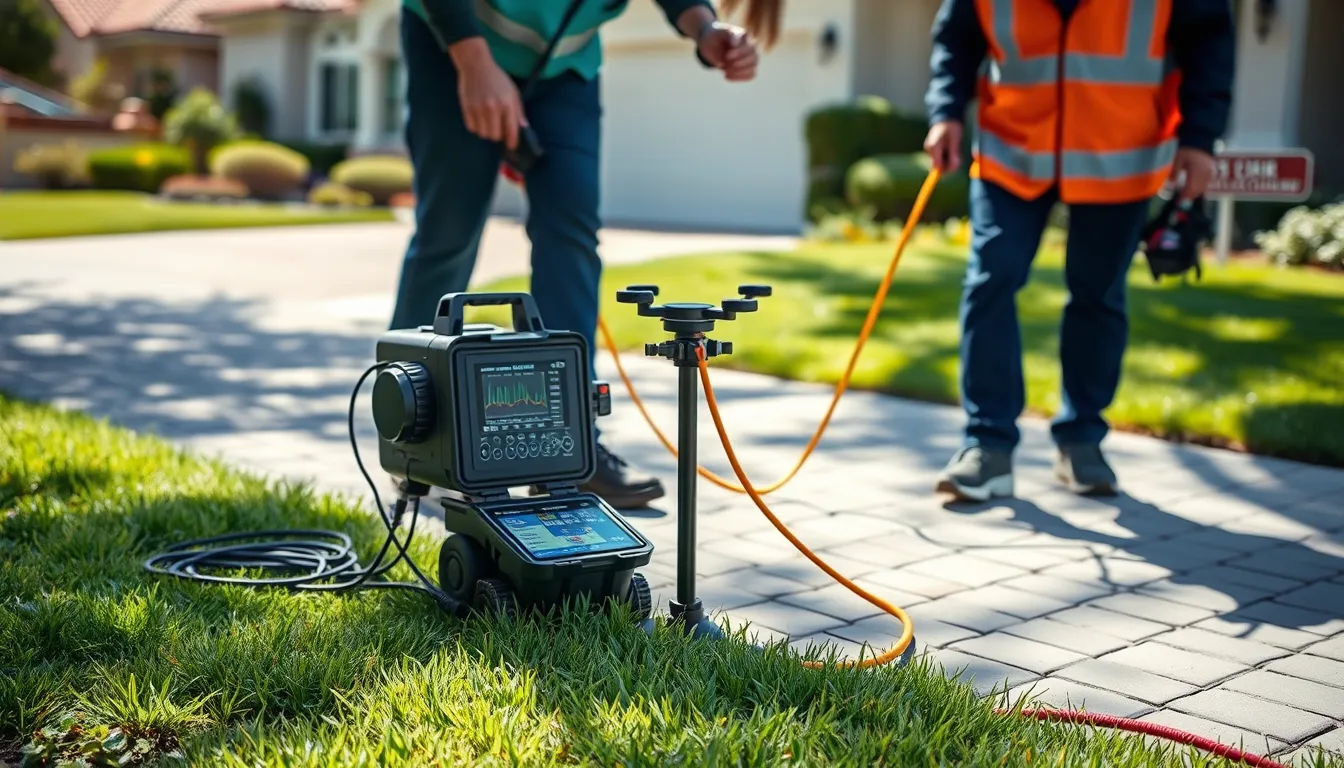
We connect high-frequency signal transmitters to the water line, mapping its exact horizontal path and depth below ground.
Acoustic Geophone & Correlator Sweep
Using digital ground geophones and acoustic correlators, we listen through soil, concrete, and asphalt to pinpoint the acoustic epicenter.
Sub-Surface Marking & Report
We paint APWA blue location marks on the surface with exact depth readings and provide transparent localized repair options.
Detecting Buried Water Leaks Beneath Los Angeles Grounds
A subterranean leak between your city water meter and home shutoff valve can remain unnoticed for months, steadily eroding foundation soil and racking up astronomical utility bills. In drought-sensitive Los Angeles, underground leaks waste massive volumes of clean water every hour.
Because water takes the path of least resistance underground, surface wetness often appears 20 to 50 feet away from the actual pipe break. Guessing where to dig can ruin your yard and driveway.
Red & Blue deploys specialized ground acoustic microphones that listen through soil, pavers, and asphalt. By introducing inert tracer gas or utilizing high-sensitivity acoustic correlation, we identify the exact GPS and physical coordinates of the line rupture.
- Spongy, perpetually wet patches on lawn or garden beds during dry weather
- Water bubbling up between pavers, driveway joints, or sidewalk cracks
- Sudden drop in interior water pressure across all fixtures
- Meter dial spinning when main home shut-off valve is turned off
- Depressions or sunken areas developing on lawn or driveway
Equipment, Tools & Materials We Deploy
Engineered diagnostic sensors and heavy-duty materials meeting Uniform Plumbing Code (UPC) standards.
| Category | Equipment / Material | Technical Application | Usage Criterion & Standard |
|---|---|---|---|
| Diagnostic | Sub-Surface Acoustic Ground Geophone | Listens through dirt, asphalt, and concrete to detect pressurized water escaping | Bandpass filtration isolating 100 Hz to 2,500 Hz soil vibration frequencies |
| Diagnostic | Electromagnetic Pipe & Cable Locator | Maps depth and trajectory of buried metallic and conductive water pipes | Dual-frequency induction transmitter accurate within +/- 2 inches |
| Material | Continuous HDPE & Type K Heavy Copper | Underground main line replacement and heavy-duty spot couplings | ASTM D3035 HDPE and ASTM B88 Type K underground copper |
| Safety | Gas & Utility Proximity Detector | Verifies absence of buried electrical or gas lines before pinpoint digging | California DigAlert 811 compliance and OSHA excavation standards |
Sub-Surface Soil & Piping Dynamics
In Southern California, expansive clay soils expand in wet weather and contract during droughts, creating shear stress on buried galvanized iron, copper, and PVC pipes. Our equipment works effectively across all soil densities, crushed gravel beds, brick pavers, poured concrete, and asphalt driveways.
Spot Excavation vs. Trenchless Main Line Pulling
Objective technical criteria determining whether localized repair or complete line rerouting is the smarter investment.
| Technical Factor | When Localized Repair is Advised | When Complete Replacement / Reroute is Advised |
|---|---|---|
| Pipe Condition | Single localized rock strike on otherwise healthy modern copper | Aged galvanized pipe with widespread exterior rust and thin walls |
| Surface Location | Breach located in an easily dug open planter bed or lawn | Breach situated beneath concrete driveway, patio, or mature trees |
| Landscape Impact | Small 2x2 foot hand-dug hole at exact confirmed coordinates | Trenchless pulling pulls continuous pipe with zero driveway cutting |
| Lifespan | Restores local pressure; remaining old line remains vulnerable | Brand-new continuous 50+ year seamless HDPE supply line |
Variables Influencing Underground Detection Costs
We provide transparent upfront flat-rate estimates following diagnostic inspection. Final pricing is governed by clear physical parameters:
Soft grass and soil versus reinforced concrete driveways, stone pavers, or thick asphalt.
Standard 24-inch residential depth versus deep lines buried 4 to 8 feet below regraded slopes.
Short 20-foot suburban front yard runs versus sprawling multi-acre estate driveways in Beverly Hills.
Urban arterial street traffic requiring night testing or specialized digital noise suppression.
Preventative Guidelines for Underground Lines
Actionable operational practices to protect domestic water lines and prevent pressure-induced failures.
- Maintain Tree Root Clearance
- Install a Pressure Reducing Valve
- Annual Water Meter Testing
- Call 811 Before Landscaping
Sub-Surface Detection Methods Compared
Why high-tech non-invasive location saves property owners time and money.
| Diagnostic Factor | Traditional Excavators | Red & Blue Specialist |
|---|---|---|
| Detection Technique | Random backhoe digging along the presumed pipe path | ✓ Acoustic frequency correlation & ground geophones |
| Landscape Damage | Extensive trenching across lawns, gardens, and pavers | ✓ Targeted surgical spot excavation only at confirmed leak |
| Depth Capability | Struggles with pipes deeper than 2 feet without trenching | ✓ Accurately detects pipes and leaks 3 to 10 feet subterranean |
| Time to Locate | Days of manual exploratory digging | ✓ Typically located within 60 to 90 minutes of testing |
Frequently Asked Technical Questions
Direct, technical answers regarding inspection timeframes, warranty policies, and repair protocols.
How do I know if the leak is between the meter and my house? +
Can you detect leaks underneath concrete driveways? +
Do you repair the underground line once located? +
Our Los Angeles Service Areas
Prompt dispatch throughout Greater Los Angeles and the San Fernando Valley.
High Water Bill or Wet Yard in Los Angeles?
Call Red & Blue now for advanced underground leak detection. We protect your property.
Request an On-Site Inspection