Non-Destructive Swimming
Pool Leak Detection in Los Angeles
Losing more than a quarter-inch of water a day? We pinpoint whether your pool leak is in underground plumbing lines, skimmer throats, light fixtures, or structural plaster.
Request a Free Estimate
Get a fast response for your Pool Leak Detection
When You Need Pool Leak Detection: Symptoms & Technical Diagnosis
Identifying subtle indicators of plumbing breaches before catastrophic structural settling or high utility bills occur.
Water Level Dropping Over 1/4 Inch Daily
Pool loses more than a quarter-inch of water in 24 hours, exceeding normal evaporation rates.
Air Bubbles in Return Jets & Pump Basket
Air continuously bubbling through pool return fittings or visible in the clear pump lid.
Cracking or Sinking Concrete Pool Coping
Deck pavers shifting or cracks opening between the pool coping stone and deck.
Automatic Water Leveler Running Constantly
Autofill float valve operates continuously day and night, masking active water loss.
Technical Procedure for Pool Leak Detection
Our systematic protocol ensures non-destructive accuracy, strict safety compliance, and certified pressure retention.
Evaporation Bucket Test & Loss Measurement
We measure exact daily water loss against ambient Los Angeles climate evaporation to quantify loss in gallons per hour.
Underwater Dye Testing & Shell Inspection
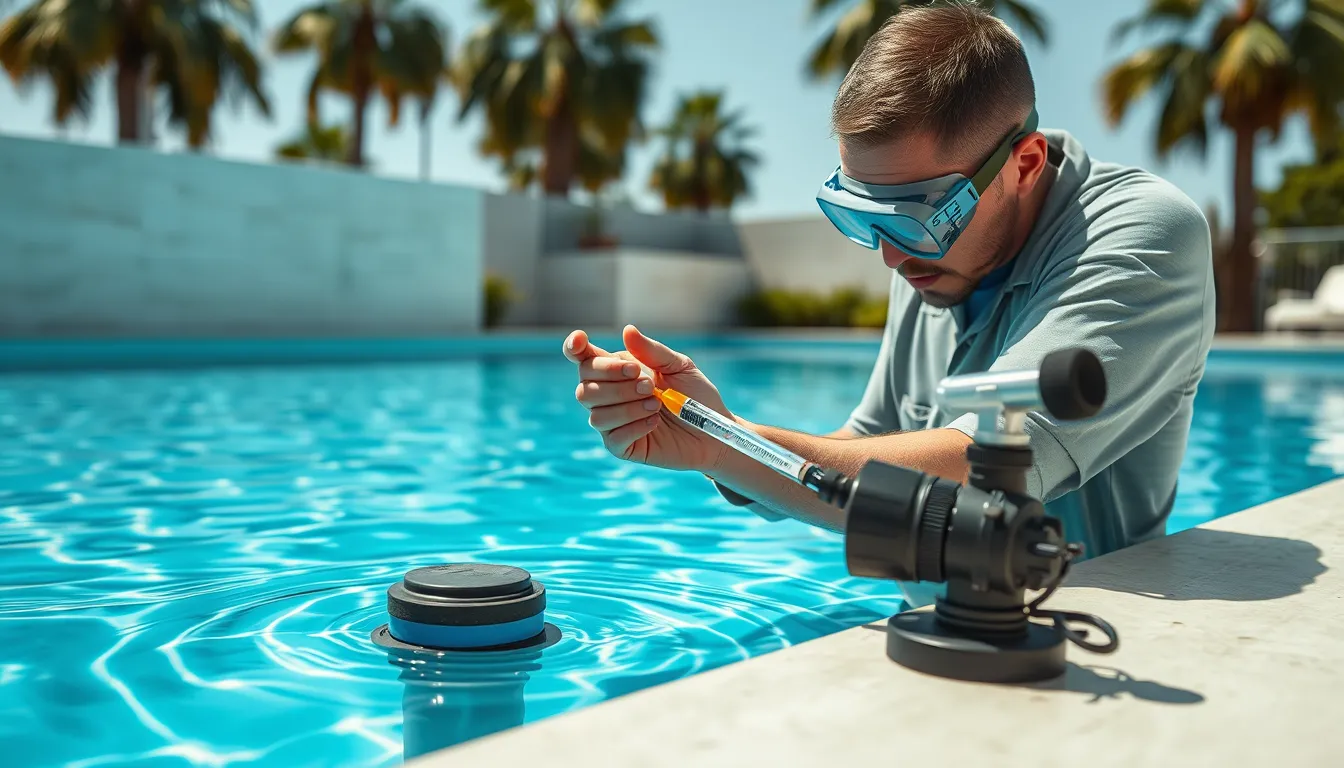
Our technician inspects skimmer throats, return fittings, light niches, and plaster seams with target-density fluorescent dye syringes.
Plumbing Loop Hydrostatic Pressure Test
We isolate suction lines, return lines, main drains, and cleaner lines with inflatable plugs and pressure-test each loop with nitrogen.
Sub-Surface Acoustic Deck Locating
If a buried plumbing line fails, acoustic listening sensors pinpoint the exact pipe break beneath the deck without tearing up the yard.
Comprehensive Swimming Pool Leak Diagnosis in Los Angeles
In Southern California's warm climate, some pool water loss is natural due to evaporation. However, if your pool loses more than 1/4 inch of water in 24 hours, you have an active leak that demands immediate attention. Left unchecked, water eroding beneath your pool shell can cause catastrophic settling, deck cracking, and pump cavitation.
Pool leaks fall into two categories: structural shell leaks (cracks in plaster, skimmer seams, light conduit leaks) and underground plumbing leaks (suction lines, return jets, main drain lines, cleaner lines).
Red & Blue systematically isolates each component. We perform precision bucket evaporation tests, dive-inspect fittings with target-density dye syringes, and pressure-test underground plumbing loops using nitrogen to pinpoint the exact failure point.
- Pool water level dropping faster than 1/4 inch per day
- Air bubbles continuously shooting from return jets
- Cracking or sinking in the concrete pool coping or deck pavers
- Automatic pool autofill running constantly throughout the day
- Soggy or pooling water in the grass or yard adjacent to the pool
Equipment, Tools & Materials We Deploy
Engineered diagnostic sensors and heavy-duty materials meeting Uniform Plumbing Code (UPC) standards.
| Category | Equipment / Material | Technical Application | Usage Criterion & Standard |
|---|---|---|---|
| Diagnostic | Submersible Underwater Hydrophone | Listens to water escaping through microscopic cracks in plaster, vinyl, or light niches | High-sensitivity waterproof acoustic sensor detecting underwater turbulence |
| Diagnostic | Fluorescent Precision Dye Syringes | Visualizes water being drawn into structural cracks, skimmer joints, and main drains | Target-density dye matching pool water specific gravity for drift-free testing |
| Diagnostic | Inflatable Plumbing Test Plugs & Nitrogen Manifold | Seals and hydrostatically tests underground suction and return plumbing loops | Reinforced rubber mechanical plugs rated for 30 PSI test pressures |
| Safety | Pool Dive & Chemical Protection Equipment | Allows technician to inspect deep main drains and light niches safely | OSHA commercial diving and pool electrical grounding safety protocols |
Pool Shell & Plumbing Compatibility
We test all pool and spa structures found throughout Southern California: gunite/shotcrete plaster pools, pebble-finish pools, custom tile finishes, fiberglass shells, and vinyl liner pools. Diagnostics cover Schedule 40 PVC, flexible PVC, copper, and ABS plumbing networks.
Shell Crack Dye Repair vs. Underground Plumbing Excavation
Objective technical criteria determining whether localized repair or complete line rerouting is the smarter investment.
| Technical Factor | When Localized Repair is Advised | When Complete Replacement / Reroute is Advised |
|---|---|---|
| Leak Origin | Skimmer throat separation, light conduit leak, or localized plaster crack | Buried underground return or suction line broken beneath concrete deck |
| Disruption Level | Repaired underwater using specialized marine epoxy without draining pool | Targeted single-paver core access to repair broken PVC fitting |
| Pool Water Retention | Pool remains 100% full of water during testing and repair | Water level lowered only below affected return jet level during repair |
| Long-Term Reliability | Permanent structural epoxy seal backed by written warranty | Heavy-duty Schedule 40 PVC replacement coupling pressure-certified |
Pool Leak Detection Pricing Factors
We provide transparent upfront flat-rate estimates following diagnostic inspection. Final pricing is governed by clear physical parameters:
Standard rectangular pool versus complex custom layouts with attached spas, waterfalls, and sheer descents.
Testing multiple suction lines, dedicated cleaner lines, autofill lines, and separate water feature pumps.
Open grass and soil versus cantilever concrete decking, travertine pavers, or poured aggregate.
Clear, clean water is required for accurate dye testing; green or murky pools require filtration prior to scan.
Preventative Pool Maintenance Guidelines
Actionable operational practices to protect domestic water lines and prevent pressure-induced failures.
- Inspect Skimmer Waterline Caulk AnnuallyThe seam between plastic skimmer throats and pool plaster is the #1 source of pool leaks.
- Lubricate Pump Lid & Valve O-RingsApply silicone pool lubricant to all equipment O-rings every spring to prevent suction air leaks.
- Perform Quarterly Bucket TestsTest your pool evaporation rate every season to catch small leaks before deck settling occurs.
- Maintain Proper Water ChemistryKeep pH between 7.4 and 7.6 to prevent acidic water from etching copper heat exchangers.
Diagnostic Comparison: Professional vs. Guesswork
Why precision pool leak testing prevents unnecessary deck destruction.
| Evaluation Factor | Standard Pool Cleaners | Red & Blue Pool Leak Specialist |
|---|---|---|
| Plumbing Line Testing | Visual observation and trial pump shut-offs | ✓ Hydrostatic pressure testing on each isolated plumbing loop |
| Shell & Fixture Scans | Rough visual check without specialized dye tools | ✓ Underwater dye injection and high-sensitivity hydrophones |
| Underground Locating | Tearing up deck to trace return pipes | ✓ Electronic line tracing & acoustic listening through concrete |
| Report & Solutions | Vague recommendation to hire an excavator | ✓ Detailed schematic with exact coordinates for targeted repair |
Frequently Asked Technical Questions
Direct, technical answers regarding inspection timeframes, warranty policies, and repair protocols.
How can I do a simple bucket test before calling? +
Where do most pool leaks occur? +
Do you need to drain my pool to find the leak? +
Our Los Angeles Service Areas
Serving pool owners in Los Angeles, Beverly Hills, Encino, Sherman Oaks, and surrounding areas.
Suspect Your Pool is Leaking Water?
Stop wasting water and protect your pool deck. Contact Red & Blue for expert pool leak detection.
Request an On-Site Inspection